A robot can learn a task from examples, trial and error, or a mix of both. That sounds close to human learning, but the robot still needs a clear task, usable sensors, safe limits, and many successful practice runs.
- Robots can copy movements, test actions, or learn from recorded data.
- Simulation cuts the cost of early practice, but real hardware still exposes errors.
- New skills usually work only inside the conditions used during training.
Three ways robots learn
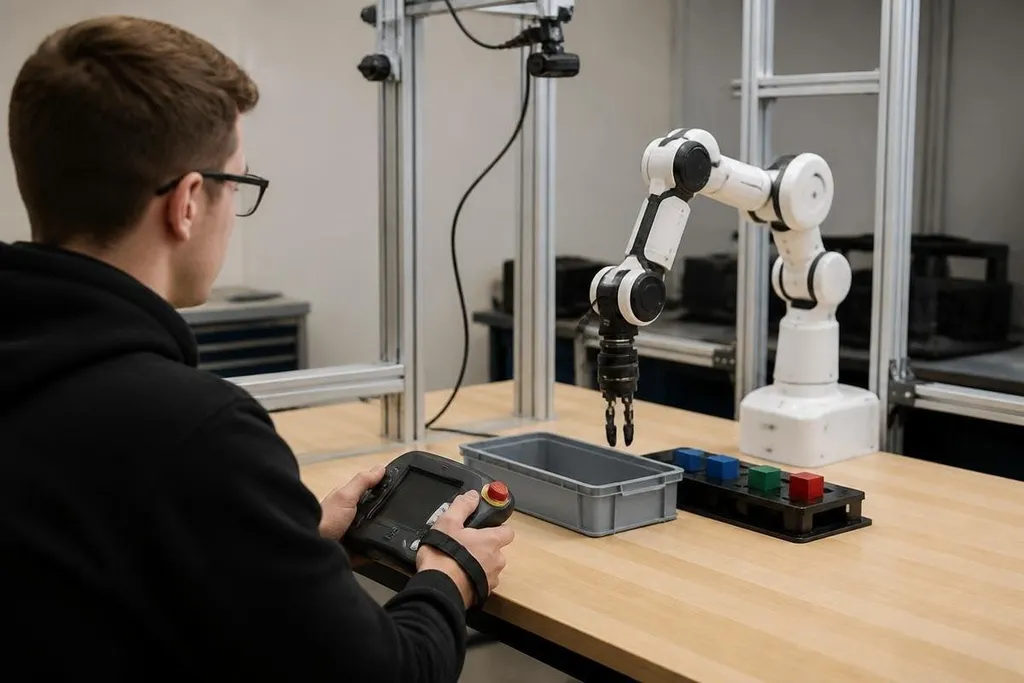
Imitation learning starts with a person or another robot performing a task. Cameras, joint sensors, or a control device record the movement. Software then links what the robot sees with the actions needed to repeat it.
This method can teach a robot to pick an object from a known area. It can also fail when the object changes shape, the lighting shifts, or the item slips. The robot has copied a useful pattern, but it may not understand the task in a wider sense.
Reinforcement learning uses a reward signal. The robot tries an action, checks the result, and receives a higher score for useful behavior. A grasp might earn points when the object reaches a target bin and lose points when the gripper drops it.
That process can find movements a person would not write by hand. It also needs careful limits. A robot that learns by touching real objects can damage the object, the gripper, or itself while testing poor actions.
Self-supervised learning takes another route. The robot creates training signals from its own sensor data, such as matching a camera view before and after movement or predicting how an object will shift after contact. This can reduce the need for a person to label every action.
Why simulation helps
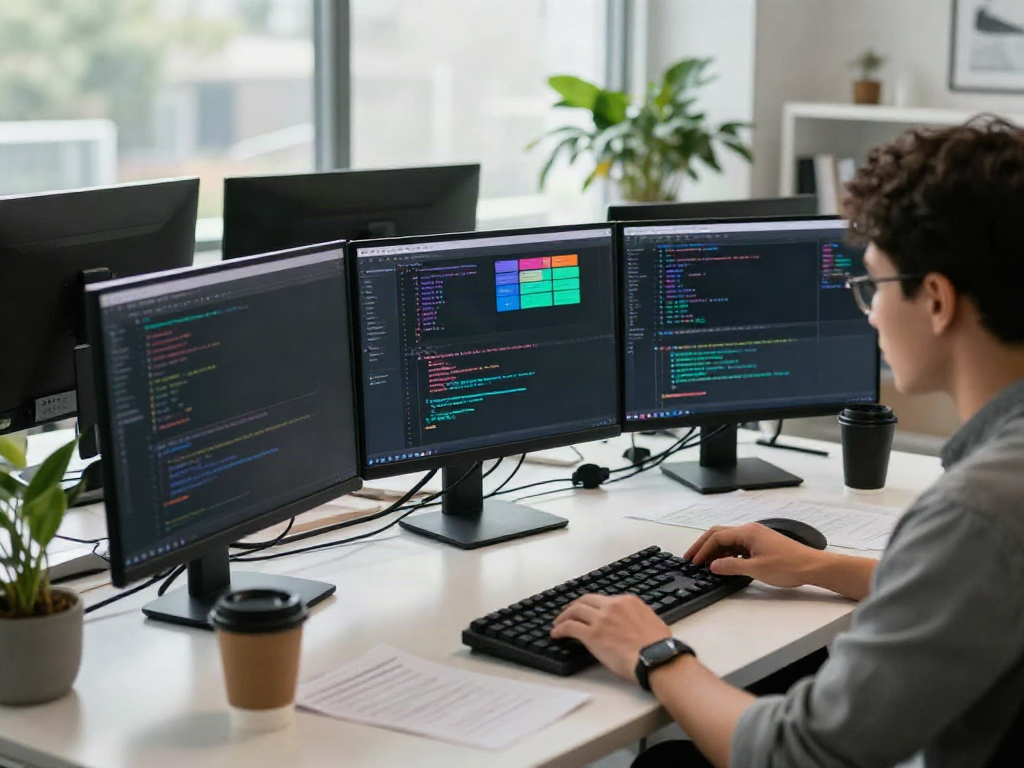
Most learning runs begin in software because practice there costs less than repeated hardware repairs. A simulated robot can repeat the same task many times, test different joint movements, and reset after failure.
The gap appears when that learned behavior reaches a physical robot. Real motors have wear, surfaces have uneven grip, and sensors contain noise. A simulated box may slide in a predictable way; a real box can catch on a seam or tilt under the gripper.
Engineers reduce this gap with domain randomization. The training software changes lighting, object weight, friction, camera position, and other conditions across many practice runs. The robot then sees more variation before it touches the real task.
Simulation still has limits. A model can miss a cable snag, a soft package, or a small delay in motor control. The final check has to happen on the machine that will do the work.
What “new skill” really means
A robot rarely invents a task from an empty starting point. It usually combines existing abilities such as moving an arm, reading a camera image, detecting contact, and opening a gripper.
A new skill may mean adjusting a known movement to a new object. It may also mean joining several actions in a new order, such as finding a part, lifting it, rotating it, and placing it into a fixture.
That distinction matters when you judge a product claim. Learning to place one cup may still require fresh training for a bottle, a metal part, or a soft package. The skill can be useful without being general.
Generalization is the hard test: a robot trained to place one cup may need new data when the bottle changes shape or weight. Robot24.com machine news can tie self-learning claims to named robots, training setups, and measured results before the next section looks at where those skills stop working.
Where the limits remain
Success needs a way to tell success from failure. That signal can come from a person, a camera, a force sensor, or the task result itself.
Poor feedback leads to poor learning, even when the software runs for a long time. Data quality matters too. Recorded demonstrations can contain slow starts, awkward hand positions, or movements that depend on a person’s body. The robot may copy those details instead of learning the part that makes the task work.
Safety adds another layer. Training rules must limit speed, force, workspace, and contact. A skill that works in a test cell may need new limits beside people or around fragile goods.
I’d trust a robot’s new skill only after it repeats the task with changed objects and conditions, not after one clean video.
A practical check before deployment
Use this checklist when a supplier says its robot can learn new tasks:
- Define success: Write down the result the robot must produce and how the system checks it.
- Test variation: Change object size, surface, lighting, position, and order where the job allows it.
- Measure recovery: Record what happens after a dropped item, blocked path, or failed grasp.
- Check training cost: Count operator time, data collection, simulation work, and real-machine tests.
- Set safety limits: Fix speed, force, stop behavior, and the area where learning can occur.
- Repeat after changes: Recheck the skill after a new gripper, camera, object, or software version.
Robots can teach themselves parts of a new skill, but the work still depends on people who define the task, supply useful feedback, and test the result. The open question is how much of that setup can be reused when the robot moves to a new job.